
Table of contents
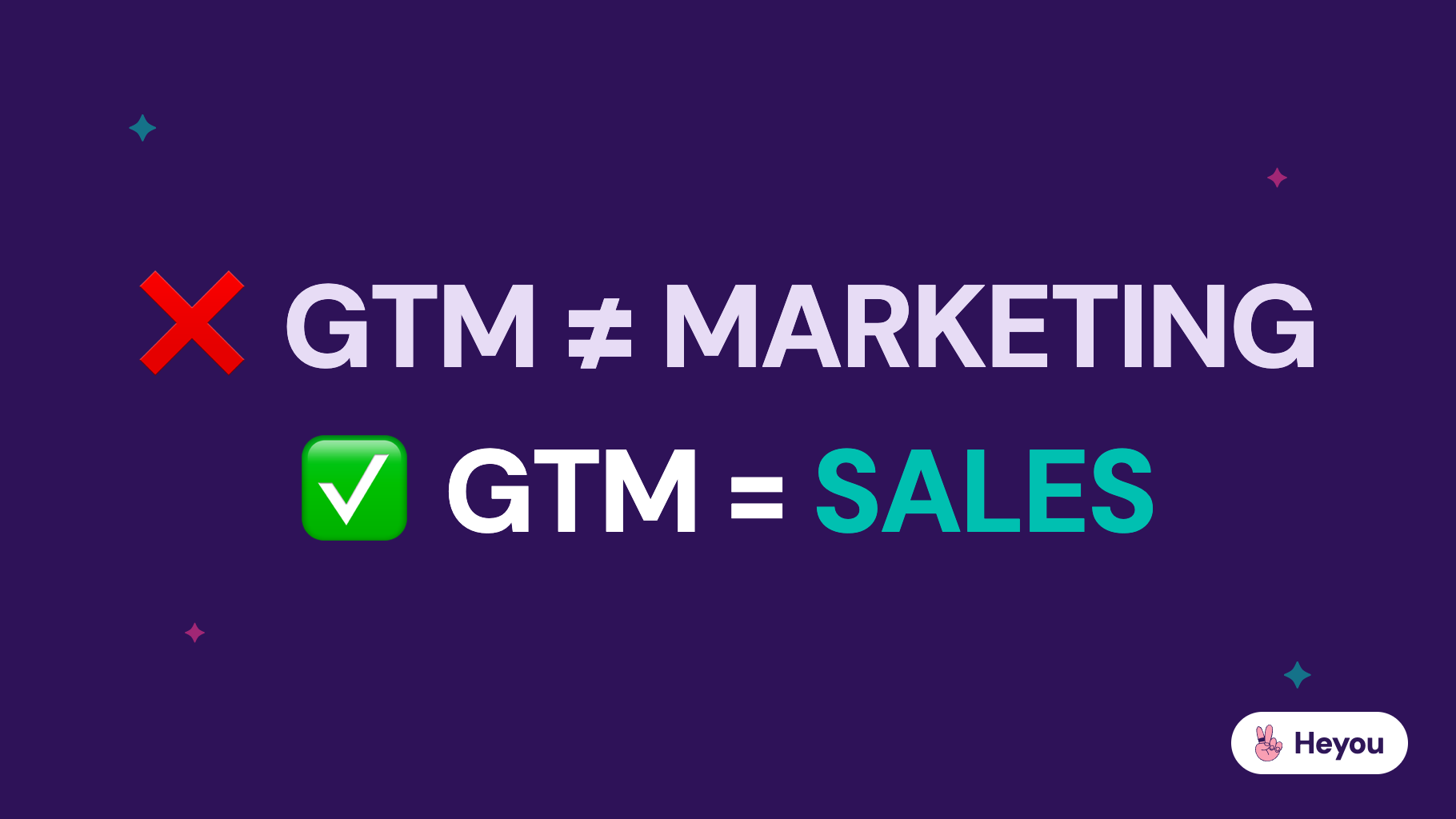
TL;DR - GTM engineering is the discipline of building the systems that run go-to-market: the data, automation, and AI agents that turn a market into pipeline. Start with the distinction most people get wrong. Marketing is how you make the market want you. GTM is how you go and get those customers. GTM engineering is how you build the machine for the second part, so your sellers spend their time in conversations instead of admin. Done well, it engineers access and action, not just more outbound volume.
GTM engineering is pipeline generation treated as a system you build, not a number you buy. The point is not more messages. It is getting into the right accounts and knowing the next action.
What is GTM engineering, and what it is not
GTM engineering, also called go-to-market engineering, is the practice of building and running the systems behind go-to-market. Instead of treating pipeline as a volume you buy, more lists, more seats, more sends, you treat it as a system you build: data sources, enrichment, signals, routing, and AI agents wired together so the right accounts surface and the right action happens next.
So what is a GTM engineer? It is the person who does this, a role that sits where revenue operations, growth, and sales meet. Part builder, part operator, part seller. The reason the role exists now is simple: the tools to automate most of go-to-market finally work, and every company is racing to centralize its stack and build smarter systems on top of it. I watch this happen in company after company around me, and the pull is real. The team that builds a good GTM system out-executes a bigger team still doing the same work by hand.
What it is not is marketing. The two get mixed up constantly, and the mistake is expensive. Marketing makes the market want you: the brand, the positioning, the story, all aimed at the customer. GTM is how you go and get those customers: pipeline, conversion, revenue. Marketing builds the want. GTM builds the revenue. GTM engineering builds the machine for the second one, so a founder who hires a content marketer and waits for pipeline is waiting for the wrong machine.
What does a GTM engineer actually do?
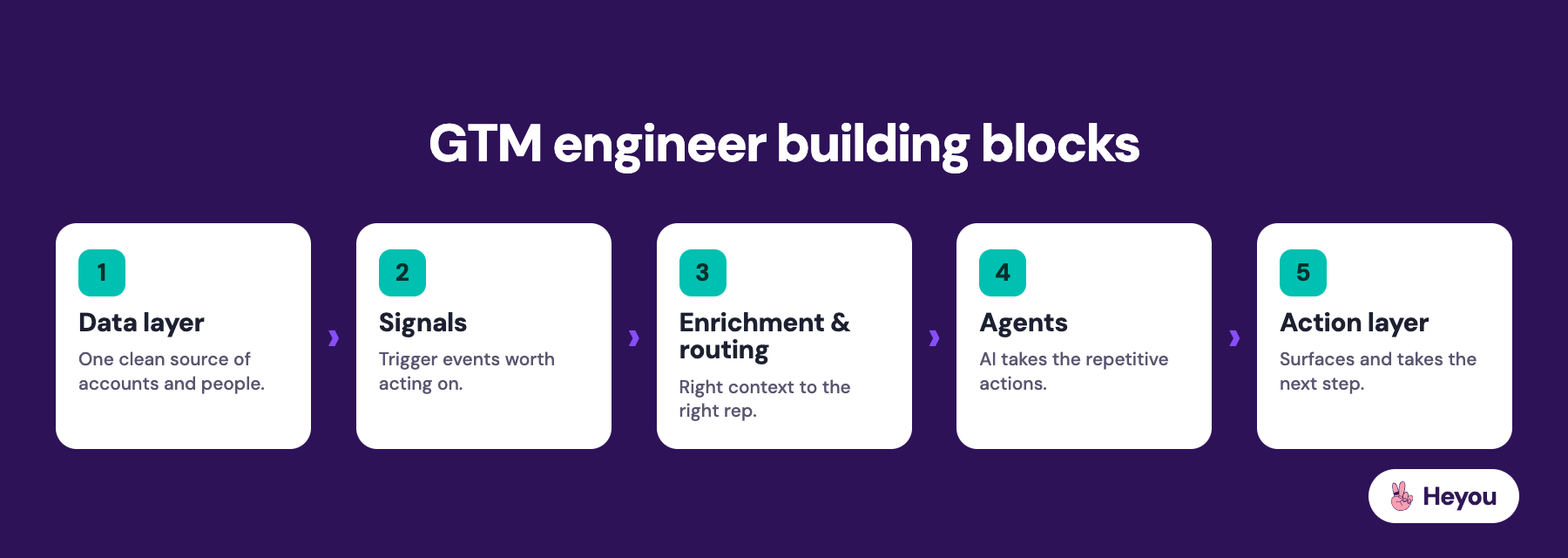
A GTM engineer builds the machine, piece by piece:
- The data layer. One clean source of accounts and people, instead of five tools that disagree with each other.
- The signals. Trigger events worth acting on, a new role opened, a funding round, a product launch, so outreach lands when it is relevant instead of random.
- Enrichment and routing. The account gets the context it needs and reaches the right person on the team automatically, with no one copying rows between tabs.
- The agents. This is the GTM automation layer: AI that takes the repetitive actions, research before a call, a first draft, the follow-up nobody remembers to send.
- The action layer. The system does not just show a dashboard. It surfaces the next action and, where it can, takes it.
The job is to clear the admin so the humans sell. A good GTM engineer is measured on pipeline that becomes revenue, not on how many tools they connected.
GTM engineering vs RevOps
They overlap, and on a small team one person does both, but they are not the same instinct. RevOps keeps the existing revenue engine running: process, tooling, reporting, and alignment across sales, marketing, and success. GTM engineering builds new motions, the automated systems and agents that generate pipeline that did not exist before. RevOps maintains the road. GTM engineering lays new ones. You want both, and you want them talking.
| What it does | GTM engineering | RevOps |
|---|---|---|
| Builds new pipeline-generating motions | ✓ | ✗ |
| Maintains the existing revenue engine | ✗ | ✓ |
| Wires data, signals, and AI agents into systems | ✓ | ✗ |
| Owns forecasting and cross-team alignment | ✗ | ✓ |
| Measured on new pipeline created | ✓ | ✗ |
Where does GTM engineering go wrong?
Here is the trap, and most teams fall into it. They build all this machinery and point it at one goal: send more. More contacts, more sequences, more automated touches. The buyer feels it instantly, and the inboxes have made raw volume close to worthless. A faster way to reach strangers who did not ask to hear from you is not an advantage. It is the same mistake, automated.
The better use of a GTM system is access. Getting you into the accounts that matter with a real reason to be there, through a path the buyer actually trusts, beats emailing more people faster every time. Build the machine to open the right door, not to knock on more of them.
↳ Heyou's Way
Treat your team's pipeline with the source that never fails.
Scale intro's and referrals →Where is GTM engineering heading?
Most stacks move data to people. They collect, score, and chart, then hand a human a dashboard to read and act on. The work of acting still sits with the person, which is why so much good data dies in a tab nobody opens.
The shift worth building for flips that around: move people to data, not data to people. The system takes the action, logs it, and surfaces only the decision that genuinely needs a human. That is where go-to-market is heading, from signal to action, and it is the real promise of GTM engineering. Not a faster spray. A system that does the work and leaves the judgment to you.
These ideas sit inside the wider go-to-market picture. They connect to agentic sales and the question of what an AI sales agent actually does, and they only pay off when the human part is strong, which is the craft of sales techniques.
What is GTM engineering?
GTM engineering is the practice of building and running the systems behind go-to-market: the data, automation, and AI agents that find the right accounts, enrich them, route them, and drive the next action. It treats pipeline generation as a system you build, not a volume you buy.
What does a GTM engineer do?
A GTM engineer builds the machine that turns a target market into pipeline. They wire together data sources, enrichment, signals, and AI agents so the sales team spends its time in conversations instead of admin. Part engineer, part revenue operator, part seller.
What is the difference between marketing and GTM?
Marketing is how you make the market want you: positioning, brand, and story, all focused on the customer. GTM is how you actually get those customers: acquiring them and converting them into pipeline across markets. Marketing builds the want. GTM builds the revenue.
Is GTM engineering the same as RevOps?
They overlap but are not the same. RevOps keeps the revenue engine running: process, tooling, reporting, and alignment across teams. GTM engineering builds new motions, the automated systems and agents that generate pipeline. RevOps maintains the road; GTM engineering lays new ones.
Will AI replace the GTM engineer?
No. AI is what the GTM engineer builds with. The role exists because someone has to decide what to automate, what stays human, and how the whole system drives the right action. AI makes a good GTM engineer more valuable, not redundant.